Introduction
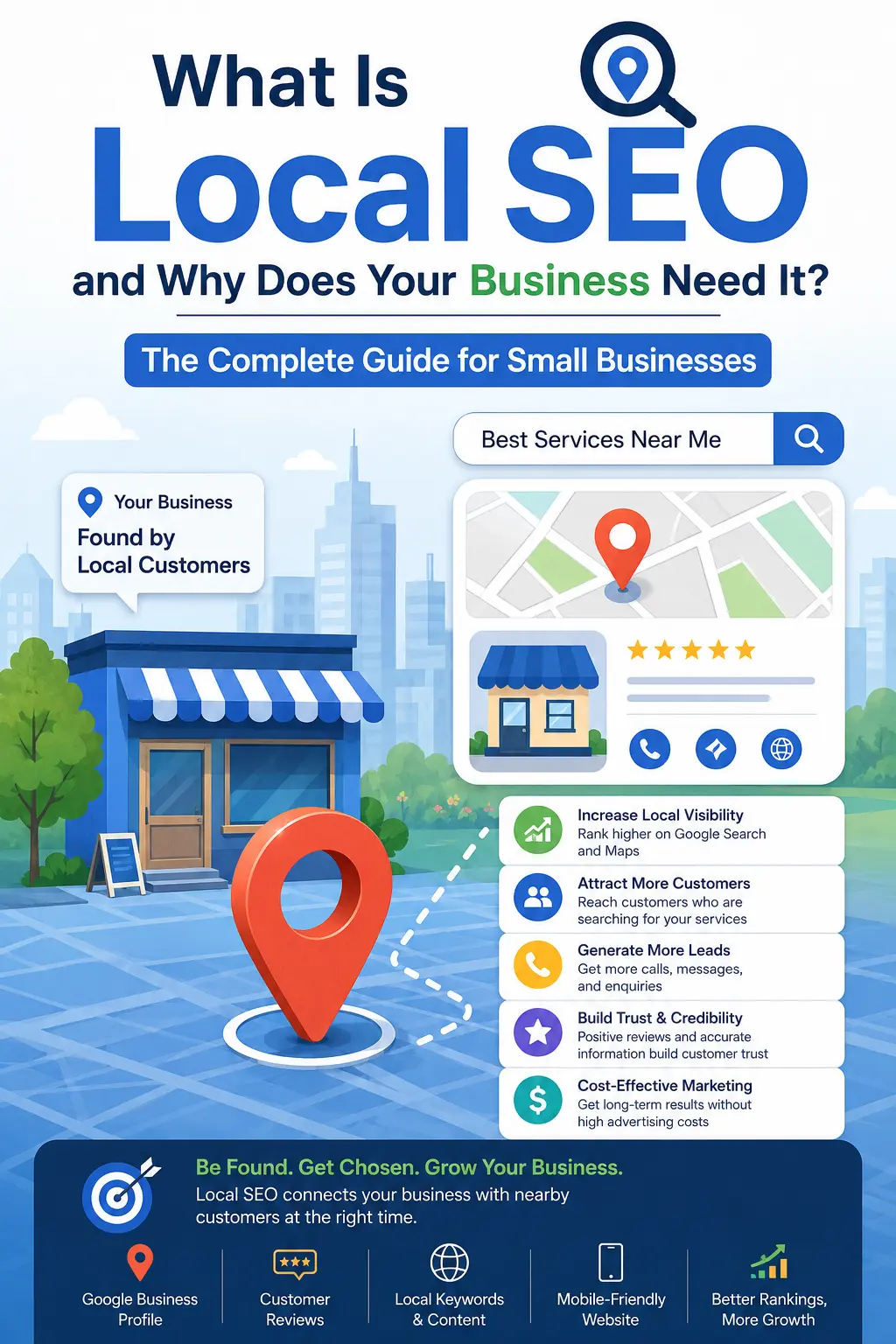
Imagine someone in your city searches for 'website developer near me', 'best diagnostic lab', or 'restaurant nearby'. Within seconds, Google displays a list of businesses along with ratings, directions, phone numbers, and websites. If your business isn't among those results, you're likely losing valuable customers to competitors every single day. Local SEO exists to solve exactly this problem by helping your business appear where local customers are already searching.
Today's consumers rely heavily on Google before making purchasing decisions. Whether they're looking for a doctor, salon, coaching institute, electrician, restaurant, or web development company, their buying journey often starts with a local search. Businesses that invest in Local SEO position themselves directly in front of customers with strong buying intent.
This guide explains everything you need to know about Local SEO, including how it works, why it matters, key ranking factors, optimization strategies, common mistakes, and actionable tips that can help your business attract more local customers.
“The best place to market your business is where customers are already looking. Local SEO helps you become visible exactly when people need your services.”
What Is Local SEO?
Local SEO, or Local Search Engine Optimization, is the practice of improving your business's online visibility so it appears in local search results on Google Search and Google Maps. Unlike traditional SEO, which focuses on ranking nationally or globally, Local SEO targets customers within a specific geographic area.
For example, if someone searches for 'best café in Ludhiana' or 'web designer near me,' Google prioritizes businesses that are relevant to the searcher's location. By optimizing your website, Google Business Profile, business information, reviews, and local content, you increase the likelihood of appearing in these valuable search results.
How Local SEO Works
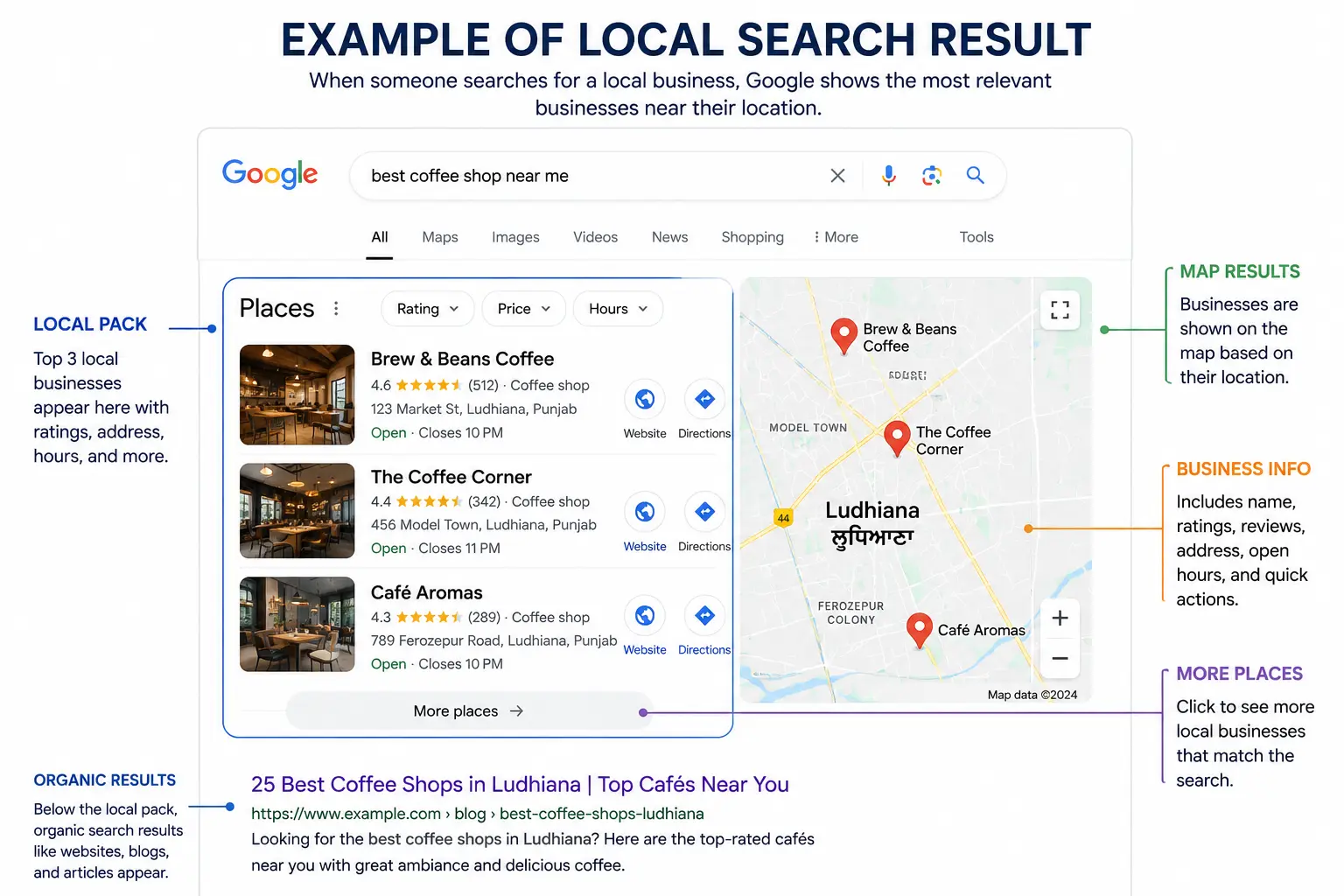
Google uses hundreds of ranking signals to determine which businesses appear in local search results. The three primary factors are relevance, distance, and prominence. Relevance measures how well your business matches the search query, distance considers how close your business is to the searcher, and prominence evaluates your overall online reputation through reviews, backlinks, citations, and website authority.
A well-optimized website combined with a complete Google Business Profile, positive customer reviews, consistent business information, and quality local content significantly improves your chances of ranking higher than competitors.
SEO Tip
Keep your business name, address, and phone number exactly the same across your website, Google Business Profile, social media accounts, and business directories.
Why Local SEO Is Important for Every Business
Consumers increasingly rely on smartphones to find nearby businesses. Whether they need a restaurant for dinner, a doctor for a health checkup, or a web developer for a new website, they usually search online first. If your business appears prominently in local results, you gain a significant advantage over competitors who have neglected Local SEO.
Unlike traditional advertising, Local SEO targets users who already have purchase intent. These people are actively searching for products or services, making them far more likely to contact your business, visit your store, or complete a purchase.
Businesses That Benefit Most from Local SEO
Almost every business serving a local audience can benefit from Local SEO. Healthcare providers, diagnostic labs, restaurants, cafes, gyms, beauty salons, lawyers, accountants, educational institutes, real estate agencies, repair services, electricians, plumbers, and web development companies all compete for local customers. Appearing at the top of Google Search can significantly increase inquiries and sales.
Even businesses that primarily operate online can benefit from Local SEO by targeting clients within specific cities or regions. For example, a website development agency can optimize pages for cities it serves to attract businesses searching for web design services nearby.
Top Benefits of Local SEO
Local SEO offers far more than higher Google rankings. It helps your business connect with nearby customers who are actively searching for your products or services. Because these users already have buying intent, Local SEO often generates better-quality leads than traditional advertising channels.
A strong Local SEO strategy increases website traffic, phone calls, store visits, appointment bookings, and online enquiries. Over time, it also builds trust through positive reviews and a consistent online presence, making customers more confident in choosing your business over competitors.
Business Tip
Unlike paid advertising, Local SEO continues generating leads long after your initial optimization work, making it one of the most cost-effective marketing investments.
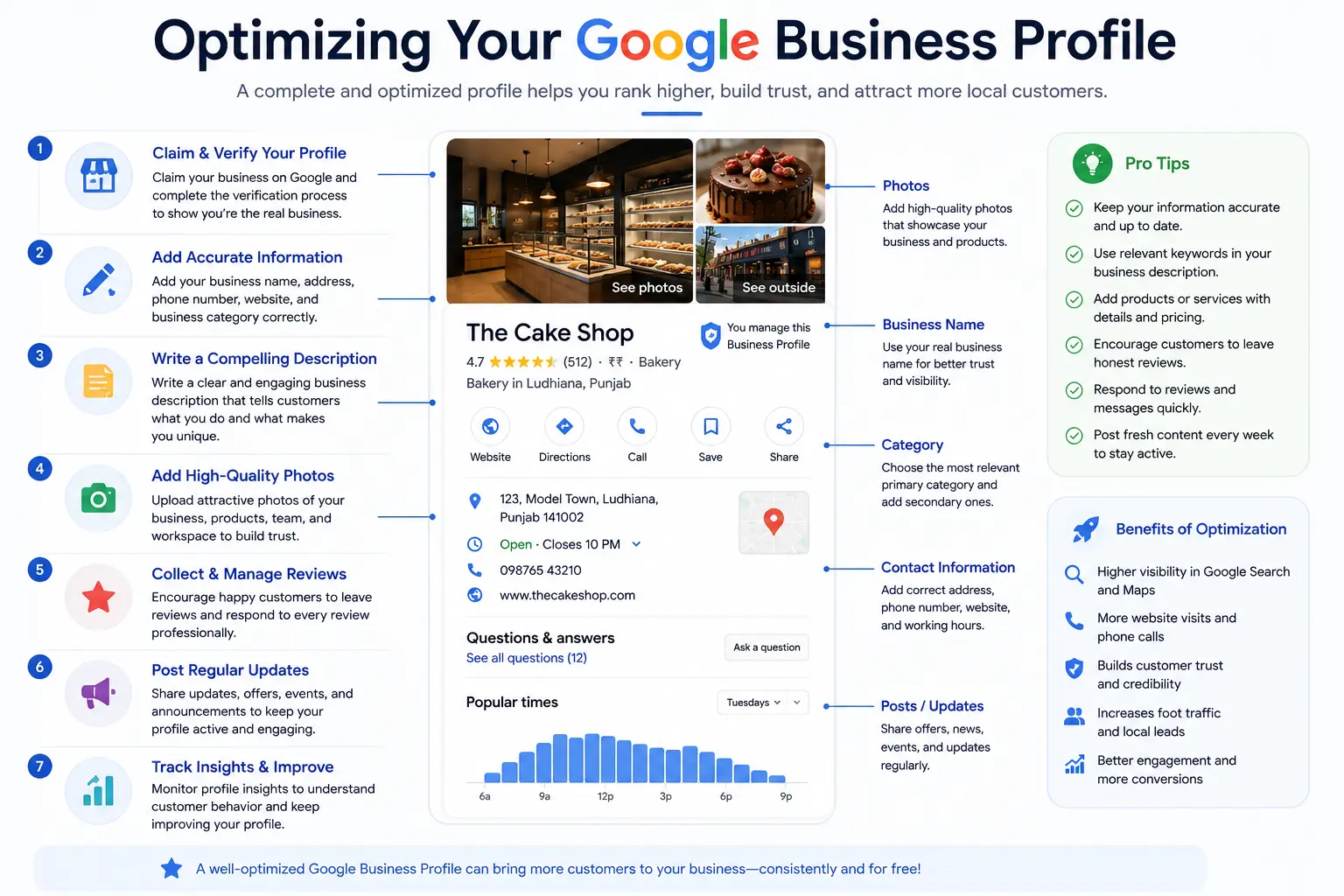
Optimize Your Google Business Profile
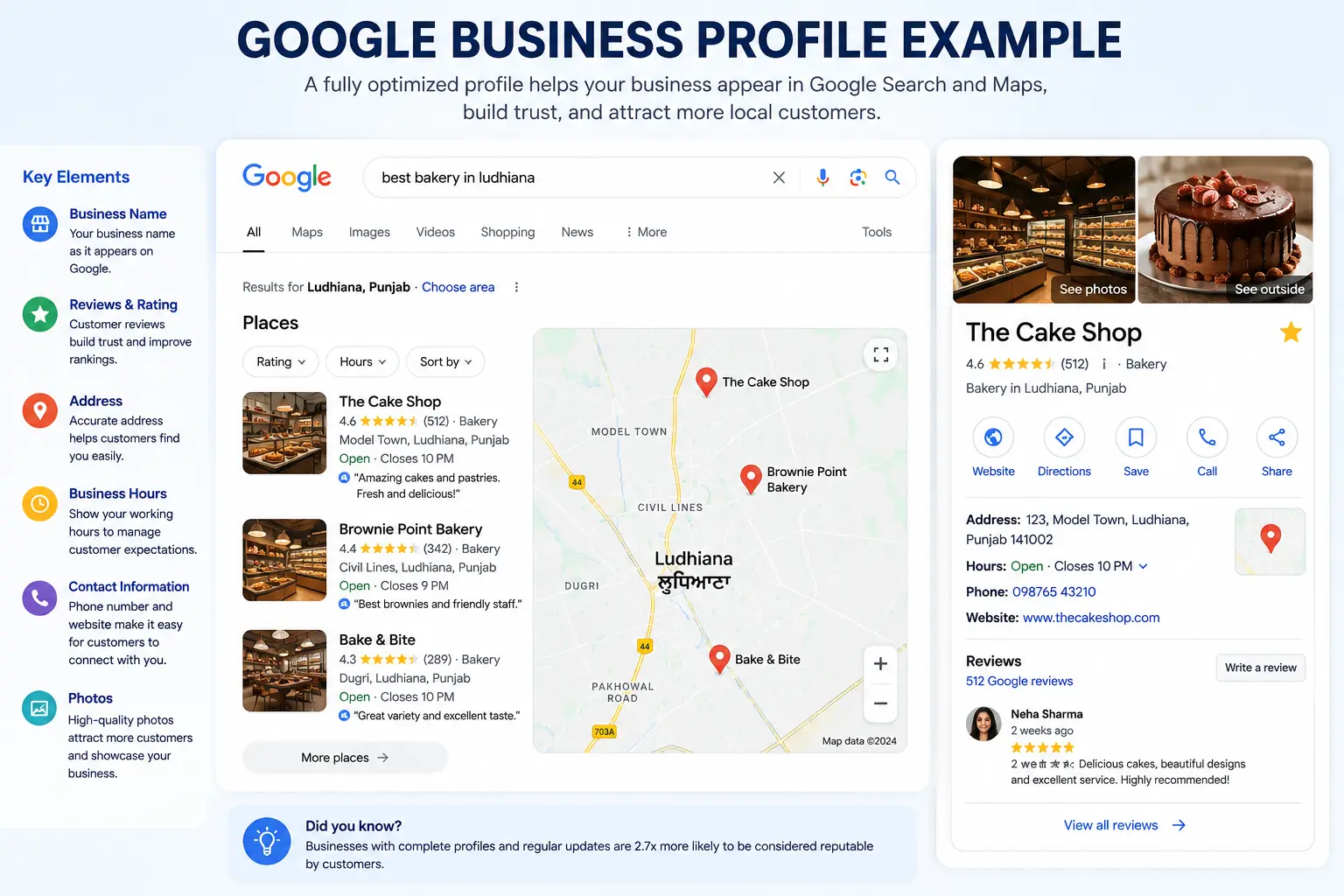
Your Google Business Profile is one of the most important elements of Local SEO. It acts as your digital storefront and provides customers with essential information such as your address, business hours, contact details, reviews, directions, and website. A complete and regularly updated profile significantly improves your visibility in Google Maps and local search results.
Choose the correct business category, upload high-quality photos, add your services, write a compelling business description, and ensure all information remains accurate. Regularly publishing updates and responding to customer questions also sends positive engagement signals to Google.
Why Customer Reviews Matter
Online reviews influence both search rankings and customer decisions. Businesses with numerous genuine, positive reviews are generally viewed as more trustworthy by both Google and potential customers. Encouraging satisfied customers to leave reviews can significantly improve your online reputation.
Responding professionally to every review—whether positive or negative—demonstrates excellent customer service. It also signals to Google that your business actively engages with customers and values feedback.
Review Strategy
Ask happy customers for reviews immediately after completing a successful service or purchase. Timing dramatically increases review conversion rates.
Optimize Your Website for Local Search
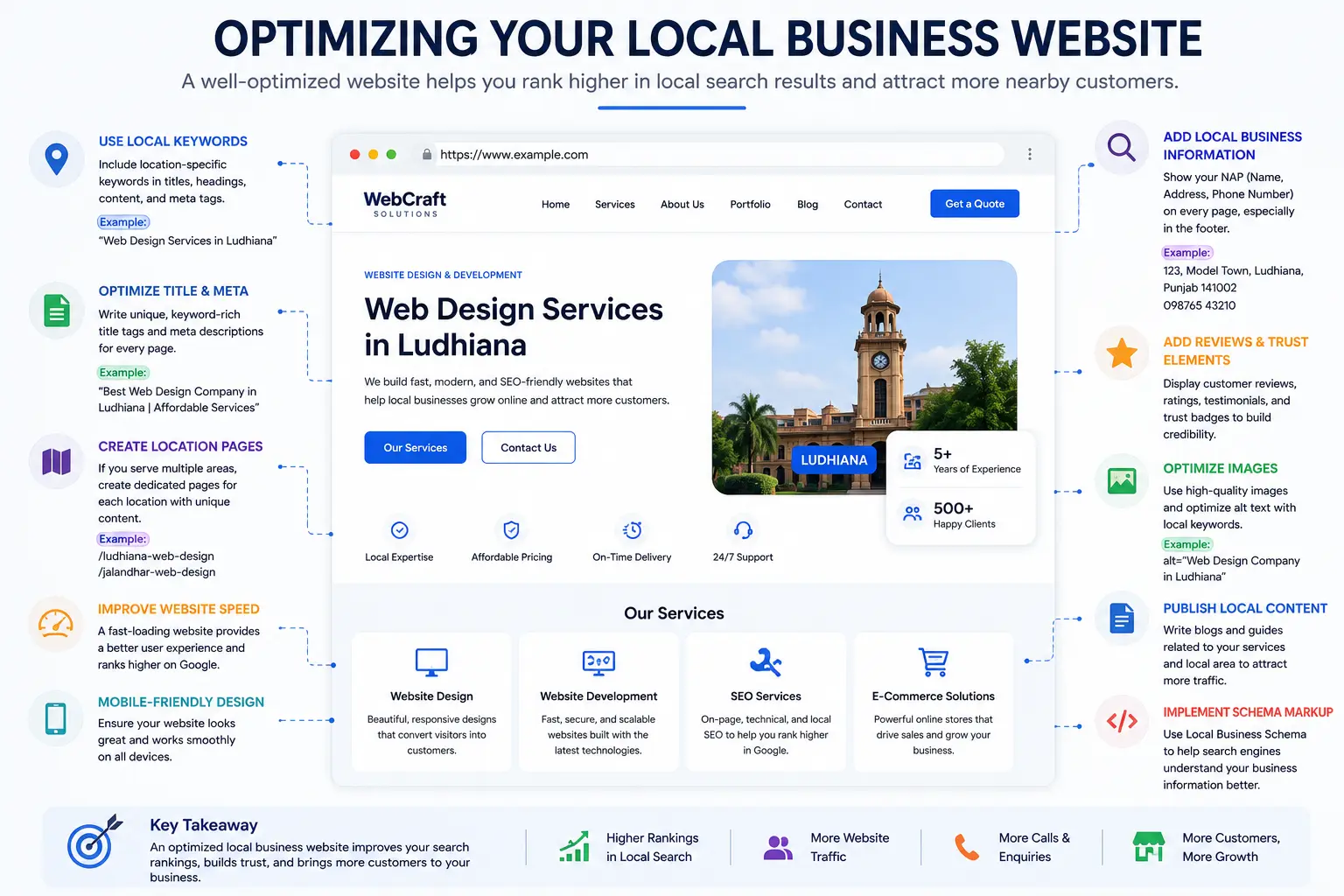
A Google Business Profile alone isn't enough. Your website should clearly communicate what services you provide and the locations you serve. Every important service should have its own optimized page, and businesses serving multiple cities should consider creating dedicated location pages.
Use location-specific keywords naturally within headings, page titles, meta descriptions, image alt text, and body content. Fast loading speeds, mobile-friendly layouts, secure HTTPS connections, and intuitive navigation all contribute to better rankings and improved user experience.
Create Dedicated Location Pages
Businesses operating in multiple cities should avoid trying to rank one generic page for every location. Instead, create dedicated location pages that include unique content, local keywords, nearby landmarks, customer testimonials, maps, and service information specific to each area.
Well-written location pages help search engines understand where you provide services while giving visitors more relevant information. They also improve your chances of appearing in searches that include city names.
Maintain Consistent Business Information
Consistency is one of the most overlooked aspects of Local SEO. Your business name, address, phone number, email address, and website URL should remain identical across every online platform, including your website, Google Business Profile, Facebook, LinkedIn, online directories, and local business listings.
Even small inconsistencies can confuse search engines and reduce confidence in your business information. Regularly auditing your online listings helps maintain consistency and strengthens your local authority.
Consistency Rule
Always use the exact same business name, address, and phone number across every online platform.
Use Local Business Schema Markup
Schema markup is structured data that helps search engines better understand your business information. Local Business Schema can include your address, phone number, opening hours, reviews, geographic coordinates, and business category. While users rarely see this data directly, search engines use it to improve search result accuracy.
Adding schema markup to your website improves communication with search engines and may contribute to richer search results, making your listing more attractive to potential customers.
Publish Helpful Local Content
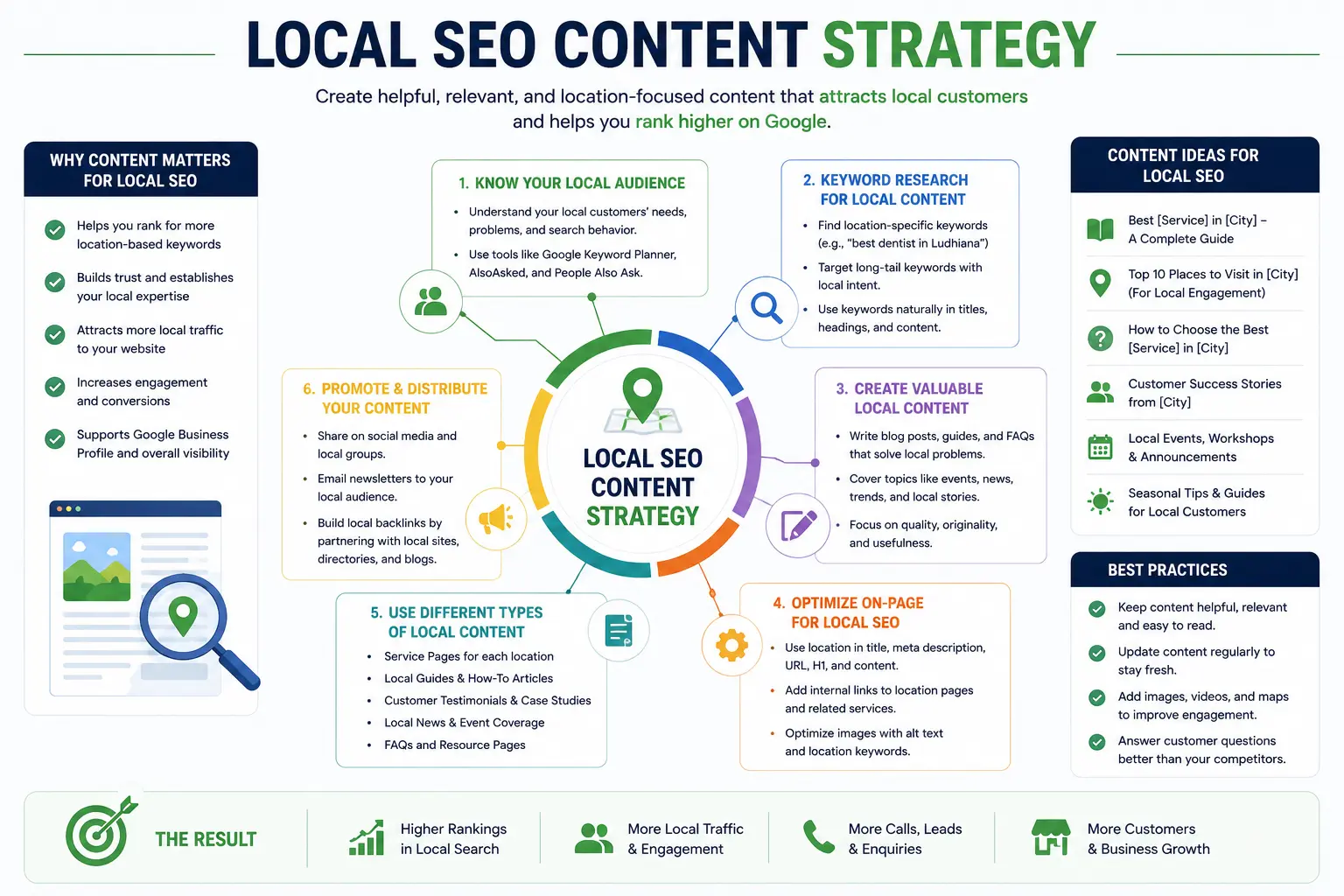
Regularly publishing valuable content demonstrates expertise and keeps your website fresh. Write articles answering common customer questions, explaining your services, highlighting local events, sharing industry insights, or providing helpful guides relevant to your audience.
Educational content builds trust while naturally expanding the number of keywords your website ranks for. It also creates opportunities for internal linking and improves your overall topical authority.
Common Local SEO Mistakes to Avoid
Many businesses invest in a website but overlook the basics of Local SEO. Missing or outdated business information, an incomplete Google Business Profile, slow website performance, and a lack of customer reviews are some of the most common reasons businesses struggle to appear in local search results.
Another common mistake is targeting broad keywords instead of location-specific phrases. Trying to rank for 'web development' is much more competitive than optimizing for 'website development company in Ludhiana' or 'SEO services in Punjab.' Local keywords attract customers who are much closer to making a purchasing decision.
Avoid These Mistakes
Don't ignore your Google Business Profile, neglect customer reviews, use inconsistent business information, create duplicate location pages, or forget to optimize your website for mobile devices.
Local SEO Checklist
A successful Local SEO strategy requires consistent optimization rather than one-time setup. Regularly reviewing your online presence helps maintain rankings and keeps your business competitive in local search results.
Use the following checklist to ensure your business is optimized for local search:
Local SEO Checklist
✔ Claim and verify your Google Business Profile. ✔ Keep business information consistent everywhere. ✔ Collect genuine customer reviews. ✔ Optimize website titles and meta descriptions. ✔ Create location-specific pages. ✔ Add Local Business Schema. ✔ Improve website speed. ✔ Make your website mobile-friendly. ✔ Publish helpful blog content regularly. ✔ Monitor rankings and website traffic.
How to Measure Local SEO Success
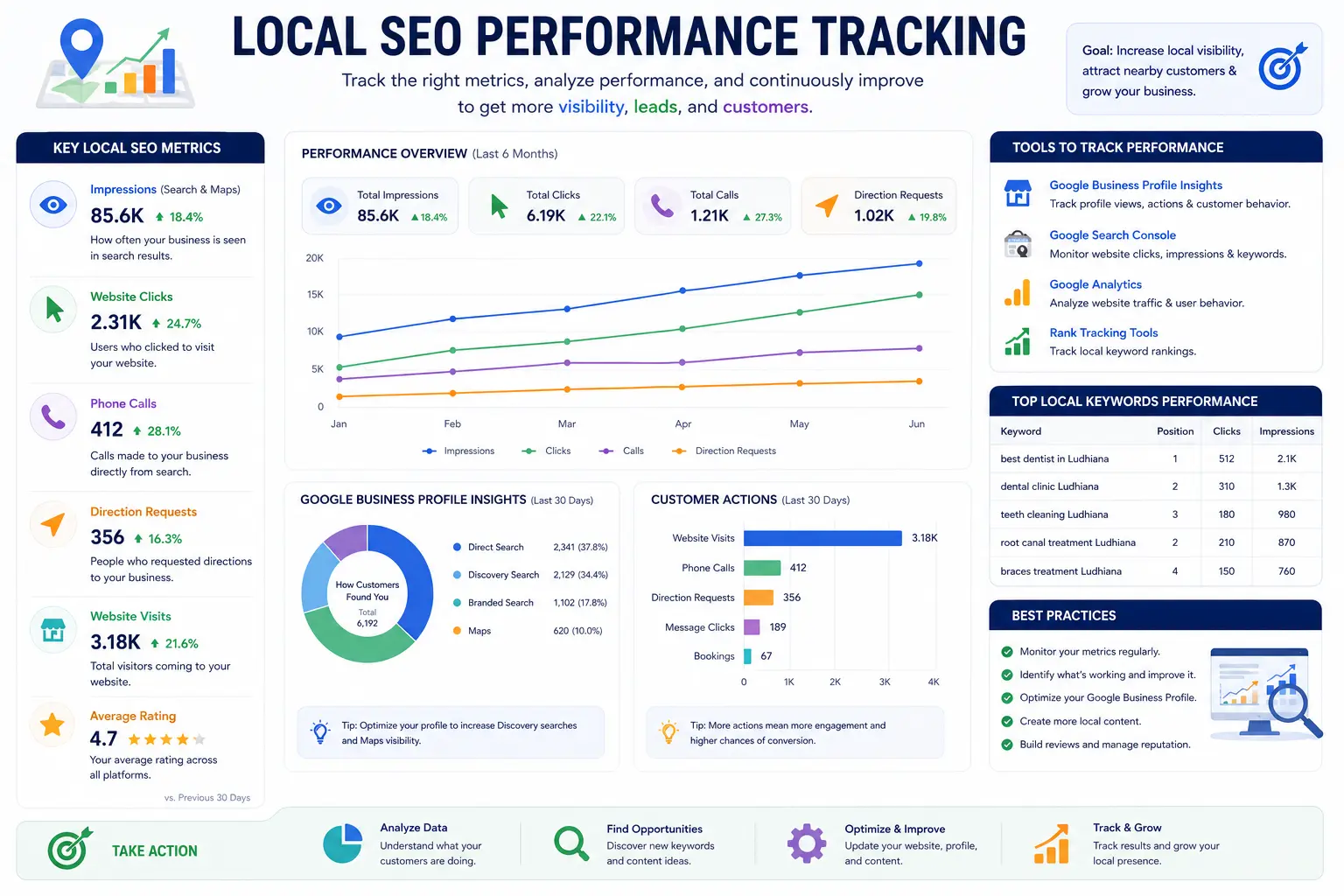
Local SEO isn't just about rankings—it's about generating real business results. Track phone calls, contact form submissions, appointment bookings, Google Maps visibility, website traffic, keyword rankings, and customer enquiries to understand how your optimization efforts are performing.
Tools such as Google Analytics, Google Search Console, and your Google Business Profile Insights provide valuable data about how customers discover your business, which keywords they use, and which pages generate the most engagement.
The Future of Local SEO
Local SEO continues to evolve as Google introduces AI-powered search experiences, voice search, and increasingly personalized search results. Businesses that consistently provide accurate information, publish valuable content, maintain positive customer reviews, and deliver excellent user experiences will continue to benefit regardless of algorithm updates.
Optimizing for voice searches, mobile-first experiences, and conversational queries is becoming increasingly important as more users search using smartphones and virtual assistants. Investing in Local SEO today prepares your business for the future of search.
“Local SEO isn't about reaching everyone—it's about being found by the right customers at exactly the right moment.”
Conclusion
Local SEO has become an essential marketing strategy for businesses that want to attract customers within their service area. Whether you own a restaurant, clinic, diagnostic lab, retail store, coaching institute, or website development agency, appearing prominently in local search results increases visibility, builds trust, and generates high-quality leads from customers who are actively searching for your services.
Success in Local SEO requires more than simply creating a website. It involves optimizing your Google Business Profile, maintaining consistent business information, collecting customer reviews, publishing valuable content, improving website performance, and continuously monitoring your online presence. These efforts work together to strengthen your authority in local search results and help your business stand out from competitors.
If you're looking to grow your business online, investing in Local SEO is one of the smartest long-term decisions you can make. A well-optimized local presence not only improves your Google rankings but also brings more qualified visitors, more enquiries, and ultimately more customers. Start optimizing today, stay consistent, and you'll build a stronger online presence that supports sustainable business growth for years to come.