Introduction
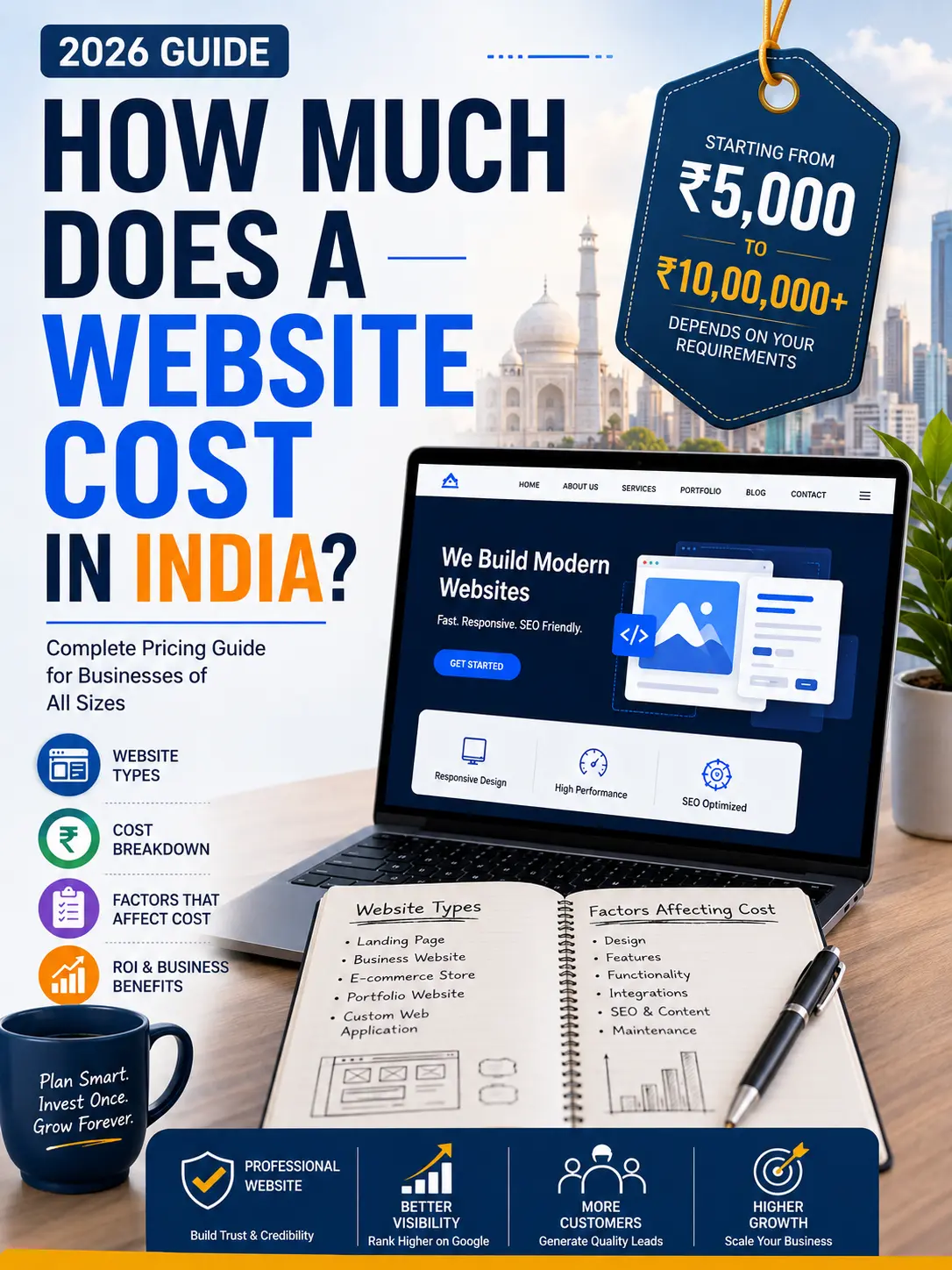
A professional website is no longer a luxury—it's one of the most valuable investments a business can make. Whether you're a startup, local business, freelancer, healthcare provider, educational institute, or established enterprise, your website serves as your digital storefront and often creates the first impression for potential customers. Before contacting your business, most people will visit your website to evaluate your credibility, services, and professionalism.
One of the most common questions business owners ask is, 'How much does a website cost in India?' Unfortunately, there isn't a single answer because every website is built for different goals. A simple landing page costs significantly less than a custom eCommerce platform or a business management portal. Factors such as design quality, number of pages, custom functionality, SEO, integrations, and long-term maintenance all contribute to the final development cost.
This guide explains everything you need to know about website development pricing in India. You'll learn the average cost of different types of websites, the factors that influence pricing, hidden expenses to consider, and how to choose the right solution for your business. By the end of this article, you'll have a clear understanding of what to expect before investing in a professional website.
“A website shouldn't be viewed as an expense—it should be treated as an investment that works for your business 24 hours a day, 365 days a year.”
How Much Does Website Development Cost in India?
Website development costs in India can range anywhere from ₹5,000 for a simple landing page to several lakhs of rupees for enterprise-level web applications. The price depends on the complexity of the project, the technologies used, the level of customization, and the experience of the developer or agency. Businesses should focus on value rather than simply choosing the lowest price because a well-built website delivers better performance, security, and long-term returns.
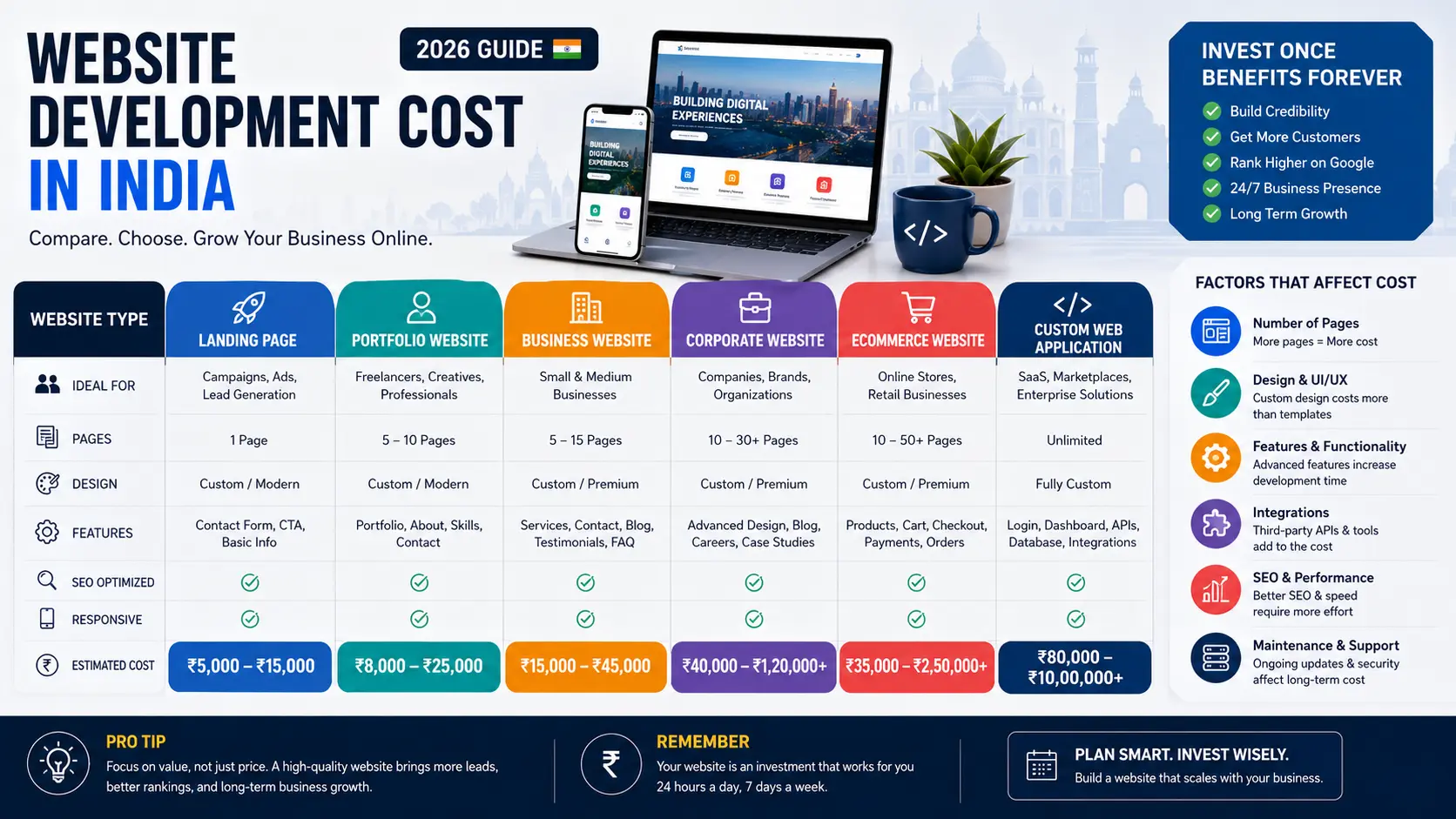
To help you understand the typical investment required, the table below provides an approximate pricing range for different types of websites. These figures represent common market rates and may vary depending on project requirements and additional features.
These prices usually include website design, development, responsive layouts, basic SEO optimization, and deployment. However, advanced features such as online payments, booking systems, customer dashboards, AI-powered tools, multilingual support, or third-party integrations will increase the overall project cost. Understanding your business goals before requesting a quote helps ensure you're paying for the features that truly add value.
Professional Advice
Don't choose a web developer based only on price. Evaluate their portfolio, technology stack, SEO knowledge, performance optimization, communication, and post-launch support. A professionally developed website often delivers a much higher return on investment than a cheaper alternative.
Why Website Development Costs Vary
Many business owners are surprised when they receive quotes that differ by tens of thousands of rupees for what appears to be the same website. The reality is that no two websites are truly identical. Some developers use pre-built templates that require minimal customization, while others create completely custom designs tailored to your brand and business goals. The technologies used, development process, code quality, scalability, security, and future maintenance all affect the final cost.
Think of website development like constructing a building. Two buildings may look similar from the outside, but the quality of materials, structural design, engineering, and future durability can vary significantly. The same principle applies to websites—a professionally built website is designed to grow with your business, perform well in search engines, load quickly, and provide a better experience for your customers.
Factors That Affect Website Development Cost
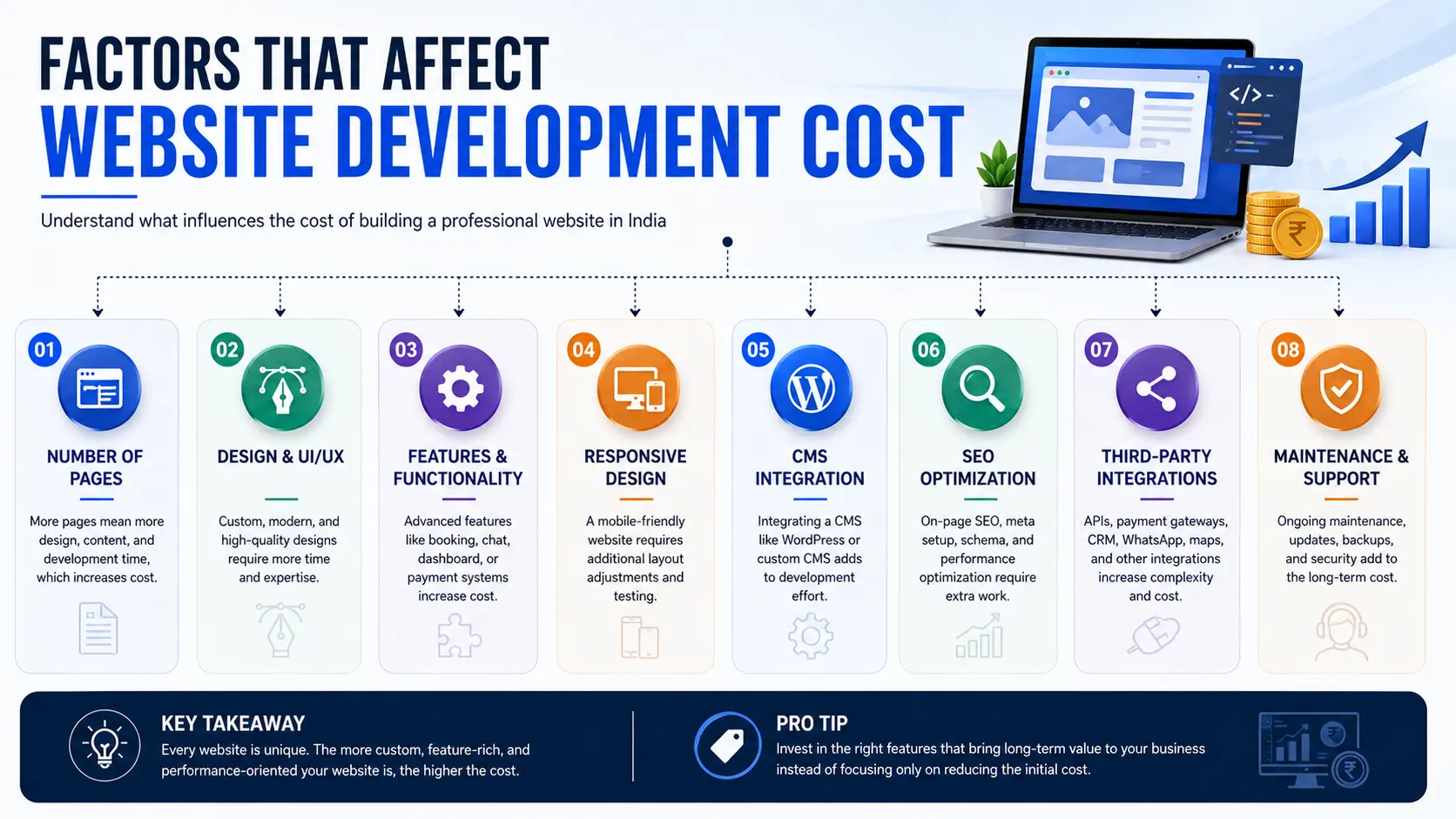
The cost of developing a website isn't determined by a single factor. Instead, it's influenced by the project's overall scope, design requirements, functionality, integrations, and long-term business objectives. A basic informational website requires considerably less time and effort than a custom platform with user authentication, payment processing, and an administrative dashboard.
Understanding what contributes to the overall cost helps business owners make informed decisions and allocate their budgets effectively. Rather than focusing only on the final price, it's important to understand what you're actually paying for and how each feature adds value to your business.
1. Number of Pages
The total number of pages is one of the first factors that affects pricing. A five-page business website requires significantly less planning, design, and development compared to a website with dozens of service pages, blogs, case studies, and landing pages. Every additional page requires layout design, content formatting, responsive optimization, and quality testing.
Businesses planning long-term SEO should also consider creating dedicated pages for each service and location. Although this increases the initial investment, it improves search visibility and helps attract more qualified visitors from Google.
2. Custom Design vs Template Design
Template-based websites are generally more affordable because much of the design work has already been completed. However, templates often limit customization, make it harder to stand out from competitors, and may include unnecessary code that impacts performance.
A custom-designed website is created specifically for your business, allowing complete control over branding, user experience, animations, layouts, and functionality. Although custom development requires a larger investment, it results in a unique digital presence that better represents your business and scales more effectively as your company grows.
Design Tip
Your website is often the first interaction customers have with your business. Investing in a custom design can significantly improve trust, engagement, and conversion rates.
3. Responsive Design
Today, more than half of all website traffic comes from smartphones and tablets. A modern website must provide a seamless experience across desktops, laptops, tablets, and mobile devices. Responsive design ensures layouts automatically adapt to different screen sizes without compromising usability.
Developing responsive interfaces requires additional testing, layout adjustments, performance optimization, and accessibility improvements. While it slightly increases development time, it's no longer optional because search engines also prioritize mobile-friendly websites.
4. Content Management System (CMS)
Some businesses need the ability to update content without depending on a developer. Integrating a Content Management System (CMS) allows administrators to manage blog posts, services, products, banners, testimonials, or portfolio items through an easy-to-use dashboard.
Whether it's WordPress, Sanity, Strapi, or a completely custom CMS, implementing content management features requires additional backend development and user interface design, which naturally affects the project's cost.
5. Search Engine Optimization (SEO)
SEO-friendly websites are built with search engines in mind from the very beginning. Proper heading structures, optimized metadata, fast loading speeds, structured data, image optimization, XML sitemaps, and clean URLs all contribute to better rankings on Google.
Although SEO increases the initial development effort, it helps businesses generate organic traffic for years without relying entirely on paid advertising. Investing in technical SEO during development is often far more cost-effective than trying to fix SEO issues after launch.
6. Custom Features and Functionality
Basic informational websites require relatively simple functionality, but modern businesses often need much more. Online booking systems, appointment scheduling, customer dashboards, payment gateways, chat systems, CRM integration, inventory management, role-based authentication, analytics dashboards, and AI-powered features all require additional planning and development.
Each custom feature increases development time because it involves frontend interfaces, backend APIs, database design, testing, and ongoing maintenance. The more unique your business requirements are, the greater the overall investment will be.
7. Third-Party Integrations
Businesses frequently connect their websites with external services such as payment gateways, WhatsApp, Google Maps, CRM platforms, email marketing software, analytics tools, shipping providers, social media platforms, or customer support systems. Each integration requires API implementation, authentication, testing, and error handling.
While these integrations improve automation and customer experience, they also contribute to development costs because they involve additional implementation and ongoing compatibility maintenance.
Investment Perspective
Instead of asking, 'What's the cheapest website I can build?' ask, 'What kind of website will help my business generate more leads and sales over the next five years?' That mindset leads to much better long-term decisions.
Website Development Cost by Website Type
Every business has different goals, and that's why websites come in many forms. A freelancer may only need a portfolio website, while an online retailer requires an eCommerce platform with payment processing and inventory management. Understanding the different website categories helps you choose the right solution without overspending on features you don't need.
Below are the most common website types in India along with their approximate pricing and ideal use cases. These estimates assume professional development with responsive design, basic SEO optimization, and modern development practices.
Landing Page
A landing page is a single-page website designed to achieve one specific goal, such as generating leads, promoting a product, collecting inquiries, or running advertising campaigns. Since it contains focused content and fewer sections, development costs remain relatively low.
Businesses often use landing pages for Google Ads campaigns, product launches, webinars, and event registrations. A well-designed landing page with persuasive content and clear call-to-action buttons can deliver excellent conversion rates.
Estimated Cost
₹5,000 – ₹15,000 depending on design quality, animations, forms, and integrations.
Portfolio Website
Portfolio websites are ideal for freelancers, developers, designers, photographers, architects, consultants, and creative professionals. These websites showcase previous work, client testimonials, skills, and contact information while building credibility with potential clients.
Although portfolio websites are generally smaller than business websites, investing in custom design and performance optimization can significantly improve your professional image and increase client inquiries.
Estimated Cost
₹8,000 – ₹25,000 depending on animations, case studies, CMS integration, and custom UI design.
Small Business Website
A business website typically includes a homepage, about page, services, contact page, testimonials, FAQs, blog, and inquiry forms. This is the most popular choice for local businesses looking to establish an online presence and generate leads.
Professional business websites focus on branding, SEO, speed, mobile responsiveness, and conversion optimization. Investing in these areas helps businesses build trust and compete effectively in their local market.
Estimated Cost
₹15,000 – ₹45,000 depending on the number of pages, custom design, and additional features.

eCommerce Website
An eCommerce website allows businesses to sell products online while managing inventory, payments, customer accounts, shipping, and orders. These websites are significantly more complex than informational websites because they involve multiple interconnected systems working together.
Features such as product catalogs, secure checkout, coupon systems, payment gateway integration, order tracking, inventory management, customer dashboards, reviews, and analytics all increase development effort and cost.
Estimated Cost
₹35,000 – ₹2,50,000+ depending on product count, integrations, custom features, and scalability requirements.
Custom Web Applications
Custom web applications are built specifically around unique business workflows and operational requirements. Examples include CRM systems, school management software, hospital management platforms, ERP systems, SaaS products, booking platforms, and customer portals.
Unlike traditional websites, custom applications require extensive planning, backend architecture, database design, authentication systems, APIs, role-based permissions, and ongoing maintenance. These projects usually involve multiple development phases and long-term collaboration.
Estimated Cost
₹80,000 – ₹10,00,000+ depending on project scope, complexity, integrations, and long-term scalability.
Website Development Cost by Industry
Different industries require different website features. A restaurant may prioritize online reservations, while a pathology laboratory needs test booking and report downloads. Understanding industry-specific requirements helps businesses estimate realistic development budgets.
Choosing features based on your industry's actual needs ensures you invest wisely. Instead of paying for unnecessary functionality, focus on features that improve customer experience, automate daily operations, and help generate more business online.
Custom Website vs WordPress: Which One Should You Choose?
One of the biggest decisions businesses face before developing a website is whether to choose WordPress or invest in a custom-built solution. Both options have their own advantages, but the right choice depends on your budget, business goals, scalability requirements, and the level of customization you need.
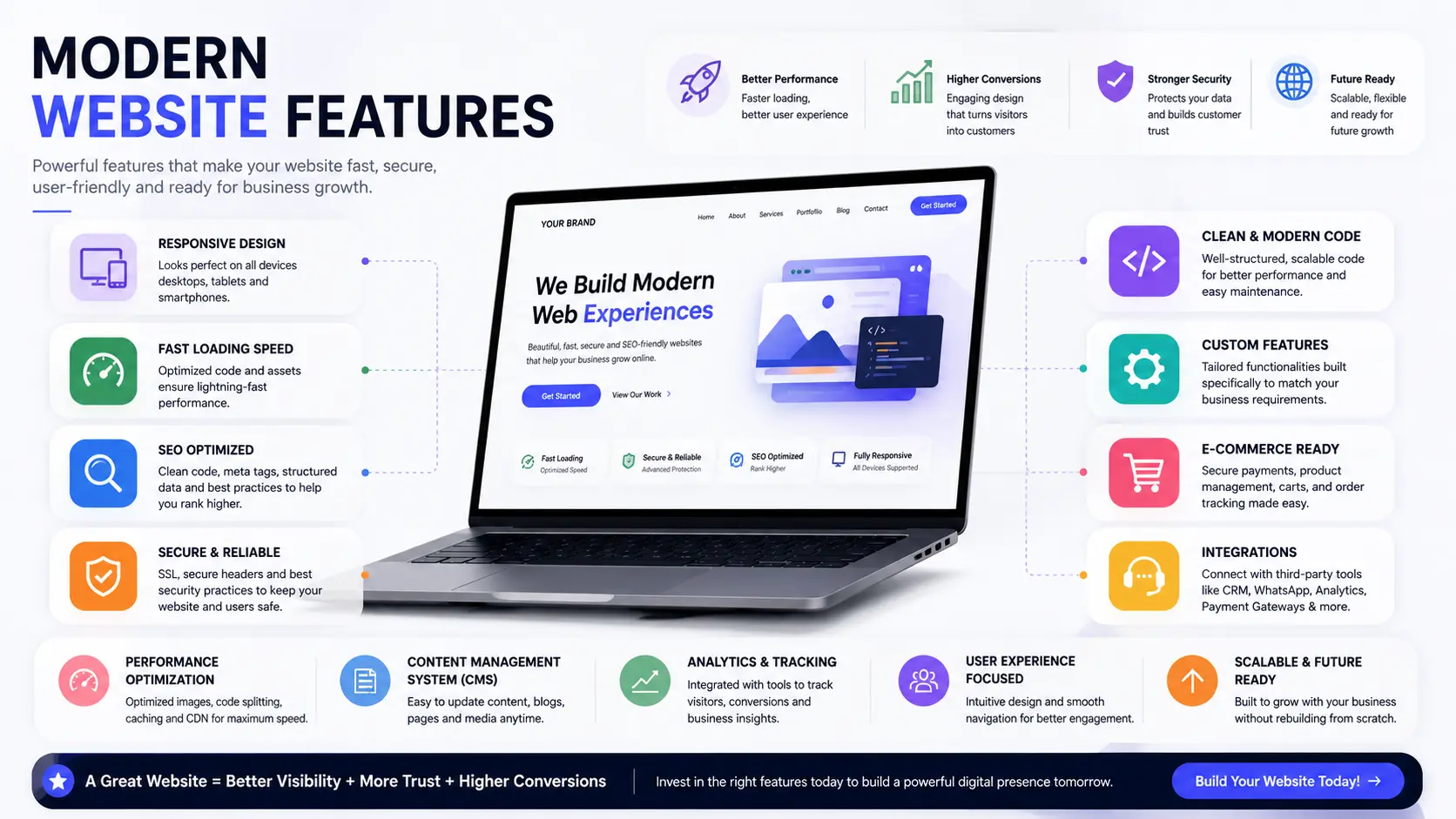
WordPress powers millions of websites worldwide because it's quick to set up and offers thousands of themes and plugins. On the other hand, custom websites are built specifically for your business using modern technologies like Next.js, React, Node.js, and Express, giving you complete flexibility, better performance, and stronger security.
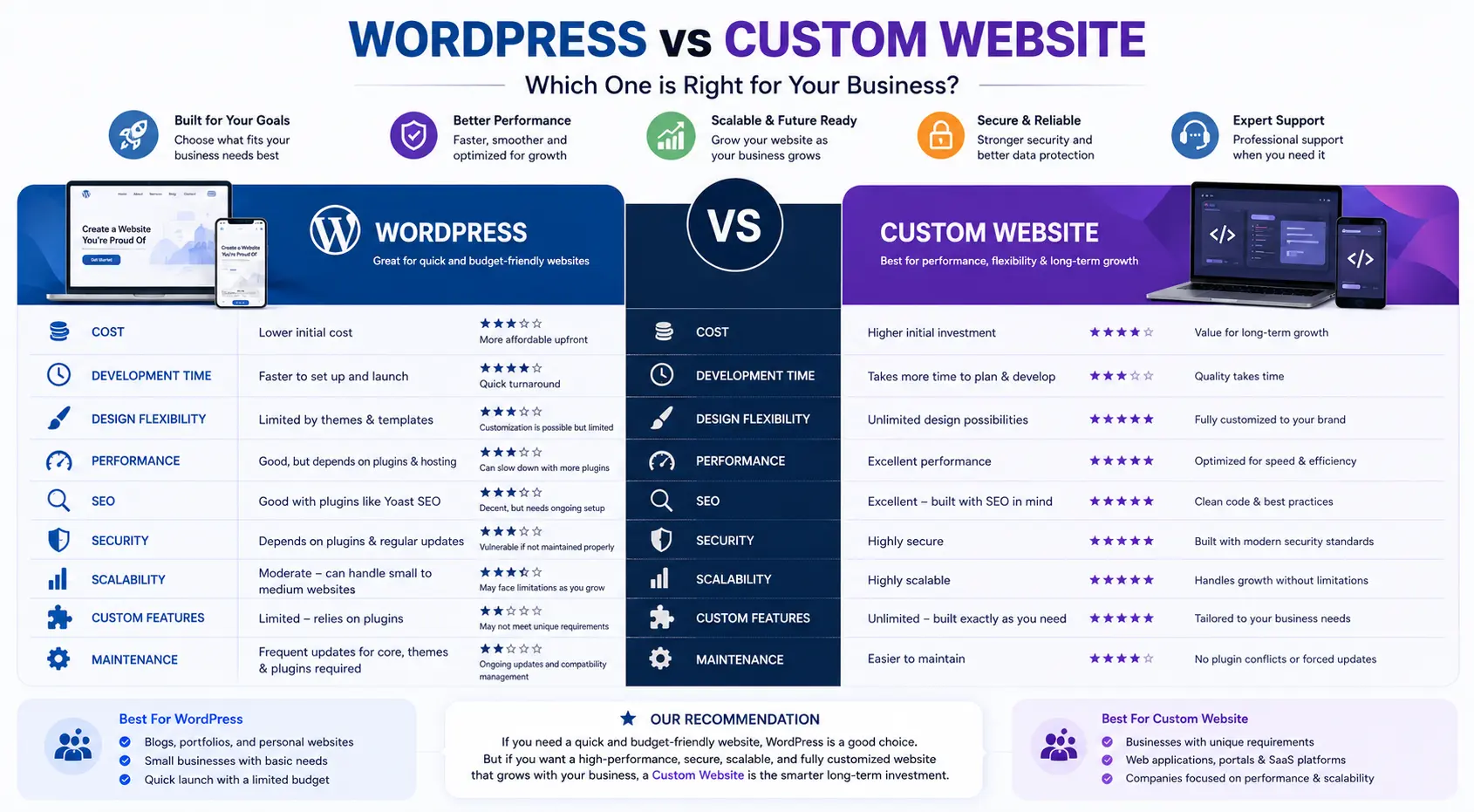
If your business only needs a simple informational website with a few pages, WordPress can be an excellent and budget-friendly option. However, businesses planning to grow online, integrate custom workflows, or build unique digital experiences often benefit more from a custom-developed website.
Professional Recommendation
If your website is expected to generate leads, handle bookings, process payments, or scale with your business over the next few years, investing in a custom website is usually the better long-term decision.
Hidden Website Development Costs You Should Know
Many people assume the quoted development price is the only expense involved in launching a website. In reality, every website has ongoing operational costs that keep it secure, accessible, and performing well. Understanding these expenses before starting your project helps you avoid unexpected surprises later.
Some costs are annual, while others depend on the complexity of your website and the level of maintenance required. These expenses are generally small compared to the value a professional website provides, but they should still be included in your overall budget planning.
Common Ongoing Costs
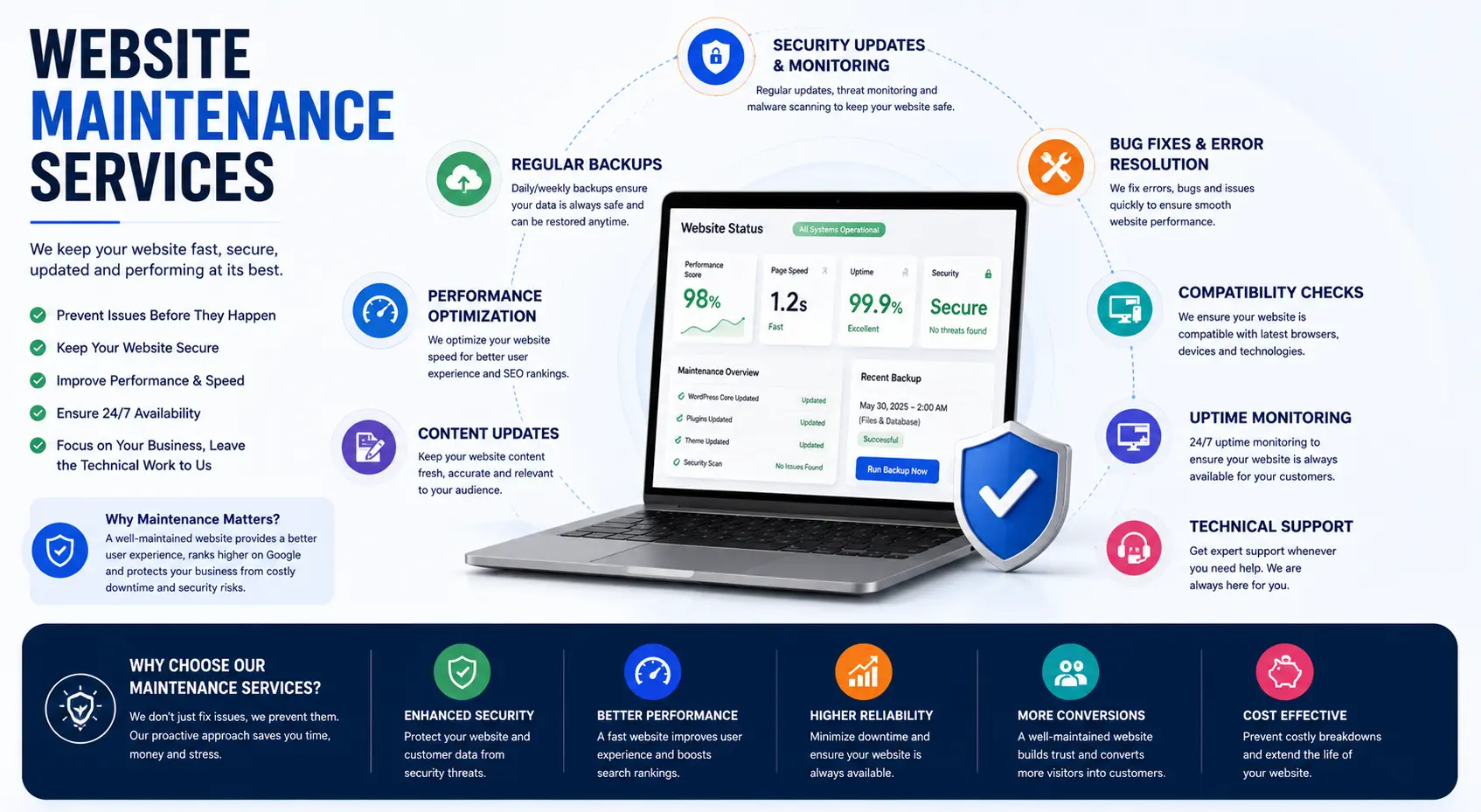
Regular maintenance includes security updates, backups, bug fixes, server monitoring, performance optimization, and compatibility updates. Neglecting maintenance can expose your website to security risks and eventually lead to downtime or broken functionality.
Avoid This Mistake
Choosing the cheapest developer without considering long-term maintenance often leads to expensive redesigns and security issues later. A professionally maintained website saves both time and money over its lifetime.
How to Save Money on Website Development
Saving money doesn't necessarily mean choosing the cheapest option. The smartest approach is to invest in features that provide real business value while postponing non-essential functionality until your business grows. Planning your project carefully before development begins can significantly reduce unnecessary costs.
Many successful businesses start with a professionally built core website and gradually add advanced features such as customer dashboards, online booking systems, mobile applications, AI assistants, or automation tools as their business expands.
Ways to Reduce Initial Cost
Start with essential pages, prepare your content before development begins, prioritize business-critical features, invest in SEO from day one, and choose scalable technologies that won't require a complete rebuild in the future.
Why Investing in a Professional Website Pays Off
A professionally developed website is much more than an online brochure—it's a powerful business asset that works around the clock to attract customers, generate leads, and build credibility. While many businesses focus only on the initial development cost, they often overlook the long-term return on investment that a high-quality website provides.
Unlike traditional advertising, a website continues to generate value long after it's launched. When combined with SEO, fast loading speeds, compelling content, and a great user experience, it becomes one of the most effective marketing channels for businesses of every size.
Benefits of a Professional Website
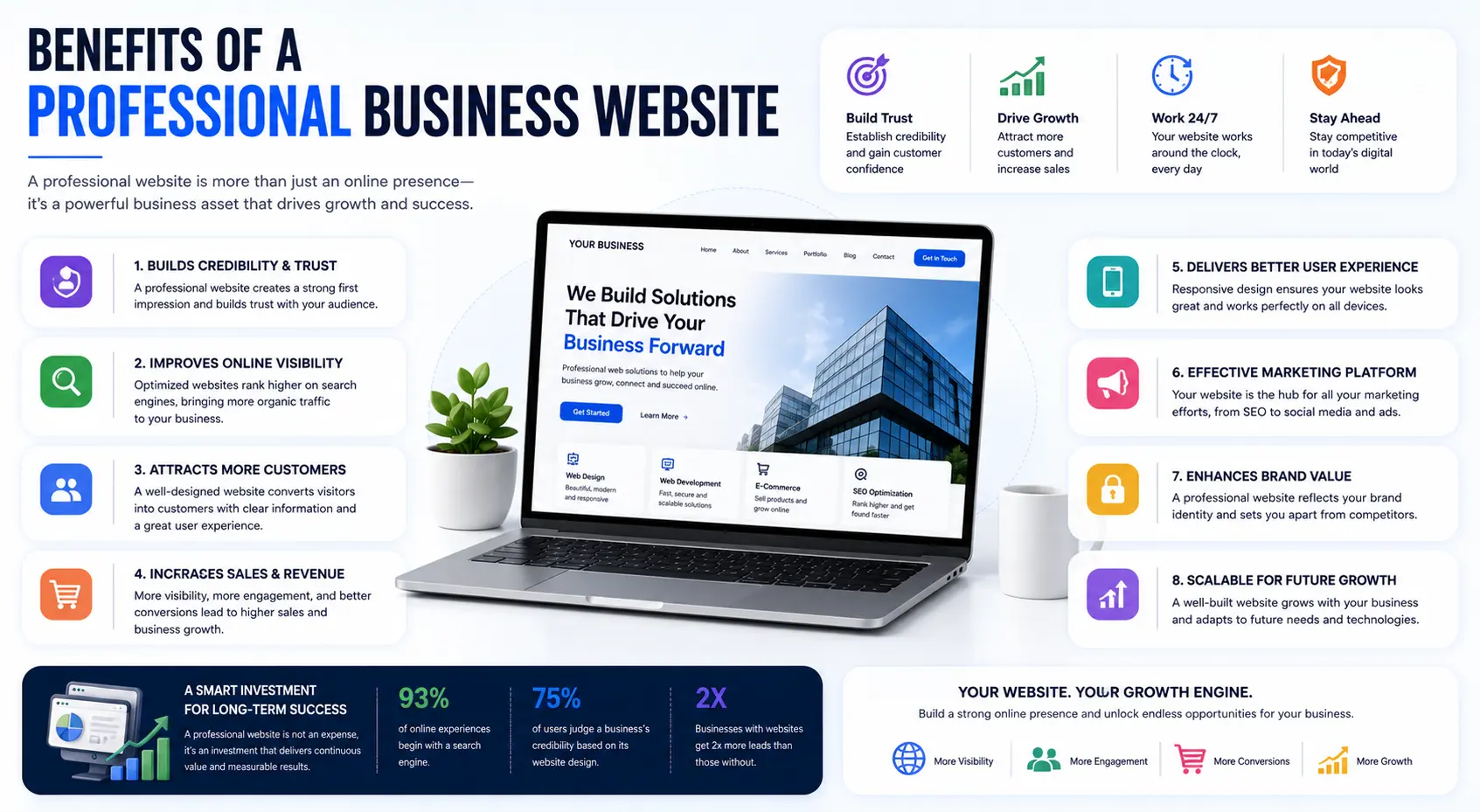
Professional websites help businesses establish credibility, improve customer trust, and create a strong first impression. Modern consumers expect businesses to have an informative, mobile-friendly website before making purchasing decisions.
Beyond appearance, a professionally developed website offers better search engine visibility, faster loading speeds, stronger security, easier scalability, and a significantly improved user experience. These factors directly influence customer satisfaction and conversion rates.
Think Long-Term
The cheapest website often becomes the most expensive one when you eventually need to redesign, improve performance, fix security issues, or rebuild it from scratch.
How to Choose the Right Website Development Company
Choosing the right developer or agency is just as important as deciding your budget. An experienced development partner doesn't simply build pages—they understand your business goals, recommend the right technologies, optimize your website for search engines, and ensure your investment continues to deliver value after launch.
Before hiring a developer, review their portfolio, ask about previous projects, understand the technologies they use, and discuss post-launch support. A transparent development process, clear communication, and ongoing maintenance are strong indicators of a reliable development partner.
Checklist Before Hiring
Review their portfolio, ask about SEO, confirm mobile responsiveness, discuss website speed optimization, understand maintenance plans, and request a clear timeline before starting the project.
Final Thoughts
Website development costs in India vary depending on your business requirements, the complexity of the project, and the technologies used. While a simple landing page may cost only a few thousand rupees, a fully customized business platform or web application can require a much larger investment. The key is to choose a solution that aligns with your current needs while leaving room for future growth.
Instead of selecting a developer solely based on price, focus on quality, experience, scalability, and long-term value. A professionally built website can become one of your business's most valuable assets by generating leads, strengthening your brand, and helping you stay competitive in an increasingly digital world.
“A great website isn't measured by how much it costs—it's measured by the value it creates for your business every single day.”
Conclusion
Whether you're launching a startup, growing a local business, or building a large online platform, investing in a professionally developed website is one of the smartest business decisions you can make. By understanding the factors that influence website pricing, comparing different website types, and planning your budget wisely, you'll be able to choose a solution that supports your long-term goals. A fast, secure, SEO-friendly, and professionally designed website isn't just another business expense—it's an investment that continues to generate returns through increased visibility, customer trust, and business growth for years to come.